Tile Roof vs. Shingle Roof: Which Is Better for Nevada Homes?
Summary: “Nevada’s extreme heat, intense UV exposure, and desert winds make roofing material selection crucial, with clay and concrete tile roofs offering superior durability, heat resistance, and a lifespan of 50–75 years or more, compared with roughly 15–22 years for architectural asphalt shingles. Although tile roofs cost more upfront, they can improve energy efficiency, reduce cooling costs, and offer better long-term value, while shingles remain a practical, budget-friendly option for homeowners seeking lower initial costs and simpler installation. Before choosing tile, homeowners should have a structural engineer verify that the roof framing can support its significantly greater weight and ensure proper ventilation and durable underlayment to withstand Nevada’s harsh climate.”
Walk down any street in Summerlin or Henderson in mid-July, and you’ll see roofers stripping brittle composite shingles down to raw plywood. Out here, the desert plays by its own set of rules. Choosing between a tile roof vs shingle roof is easily one of the priciest calls you will make as a Nevada property owner, and standard national advice will steer you straight into a financial ditch. What survives twenty-five comfortable years in Ohio or Oregon can turn into brittle kindling under our relentless Mojave sun.
Quick Comparison: Tile roofs deliver unmatched 50-plus-year durability and natural thermal deflection, making them the premier long-term investment for desert properties. Asphalt shingles provide an accessible entry price with a 15 to 25 year service life, serving budget-minded homeowners well if they understand that desert heat demands earlier replacement cycles.
Your roof is your home’s primary thermal shield. When the mercury hits 115°F in Clark County, your attic airspace easily reaches 145°F if your materials fail to breathe. Nevada homeowners face a constant tug-of-war between manageable upfront bills and brutal long-term maintenance costs. Skimp on quality today, and the first August monsoon microburst will expose every shortcut your installer took.
What You Will Learn in This Breakdown
- How intense Mojave UV radiation and thermal shock degrade organic building components.
- The honest, unvarnished lifespan numbers for barrel clay, flat concrete, and fiberglass shingles.
- Real structural load calculations you must run before converting from asphalt to stone.
- Long-term utility impact and attic cooling dynamics across our state’s diverse microclimates.
Understanding Nevada’s Unique Climate Challenges
Roofing across the Silver State is fundamentally different from anywhere else in the country. From the high-elevation snows of Reno to the blazing caliche valleys of Southern Nevada, your roof takes a beating every single afternoon.
Extreme Heat, Intense UV Rays, and Thermal Shock
The real killer out here isn’t just raw heat, it’s thermal shock. During June and July, roof surface temperatures spike past 160°F by three in the afternoon. Once the sun dips behind the Spring Mountains, that same surface cools rapidly by fifty degrees. This endless cycle of rapid expansion and violent contraction tears apart petroleum-based adhesives, pops roofing nails, and snaps substandard tiles right at their anchor points.
High Winds, Flash Floods, and Dust Storms in Las Vegas and Reno
Wind uplift is a big issue in the desert. Spring gust fronts sweeping off Mount Charleston frequently register 60 to 75 mph. If your edges aren’t sealed with high-wind fastening patterns, gusts will wedge straight under the eaves, ripping entire sections clean off the deck. Pair that with blowing caliche dust that scours protective mineral coatings like industrial sandpaper, and you begin to understand why local code enforcement stays so strict on wind warranties.
How Climate Dictates Material Longevity
Do not bank on manufacturer warranty claims printed on glossy product flyers. A shingle guaranteed for thirty years in Pennsylvania rarely makes it past year eighteen in North Las Vegas without significant curling. UV radiation breaks down volatile asphalt hydrocarbons rapidly, leaving the base fiberglass mat dry, brittle, and vulnerable to wind-shear tears.
Tile Roofs in Nevada: Clay vs. Concrete Breakdown
Walk through any master-planned community built after 1990, and you’ll see miles of tile. There is a practical engineering reason for that popularity: stone does not rot, dry out, or burn.
Clay Tiles: Classic Desert Aesthetics and Exceptional Heat Reflection
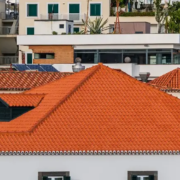
Terra-cotta and Spanish clay are fired in kilns at temperatures exceeding 1,800°F. Because of that manufacturing process, an afternoon at 115°F is nothing to them. Clay features natural microscopic porosity that reflects baking solar radiation back into the atmosphere rather than conducting it down into your rafters. The vibrant terra-cotta color never washes out because it isn’t an applied surface dye, it is baked straight through the earth itself.
Concrete Tiles: Modern Durability and Cost-Effectiveness
Concrete tiles offer a rugged, budget-conscious alternative to traditional clay. Poured from a dense slurry of Portland cement, sand, and iron oxide pigments, these interlocking panels can withstand severe hail impacts and blowing storm debris without flinching. You can get them molded into flat profiles that mimic vintage slate or deep S-curves that mirror historic Spanish mission architecture.
Lifespan and Durability Expectations (50+ Years)
The actual concrete or clay tile can easily survive eighty years. What usually gives out first is the organic layer resting underneath it. Even the best tile roofing Nevada homeowners install is only as dependable as its underlayment. In our climate, standard 30-pound organic felt paper turns into brittle potato chips after fifteen years of baking under hot tile. Always specify dual-ply modified bitumen or high-temp synthetic underlayment if you want the system to reach its full half-century potential.
Asphalt Shingle Roofs in Nevada: Pros, Cons, and Realities
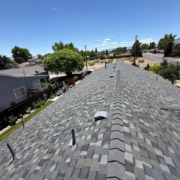
Asphalt shingles remain the most popular residential roofing material across North America because they are lightweight, versatile, and budget-friendly. Yet desert conditions expose their inherent physical vulnerabilities faster than anywhere else.
Architectural vs. 3-Tab Shingles: What Works Best in Arid Climates
If you choose asphalt, skip strip-style 3-tab shingles entirely. They are paper-thin and easily lifted by desert dust devils. Laminated architectural shingles (also called dimensional shingles) feature multiple bonded layers that provide substantial structural stiffness, offering wind ratings up to 130 mph. For homeowners researching shingle roofing Nevada properties require, architectural profiles are the bare minimum acceptable standard.
Granule Loss and UV Degradation Realities
Asphalt shingles depend on an outer crust of ceramic-coated mineral granules to shield the delicate petroleum-based core from sun damage. Desert heat bakes out the essential oils that keep the asphalt pliable. As those oils evaporate, the granules loosen and wash out of your downspouts after brief cloudbursts. Once that protective armor is gone, the exposed asphalt blisters and cracks within months.
Lifespan Expectations in the Desert (15 to 25 Years)
While architectural shingles carry nominal lifetime ratings in temperate regions, expect fifteen to twenty-two years out of them under a full desert sun exposure. You can squeeze out extra seasons by reading through practical asphalt shingle maintenance tips, such as keeping valleys free of windblown pine needles and sealing flashed penetrations every autumn.
Head-to-Head Comparison: Tile vs. Shingle Roofs
| Performance Metric | Clay / Concrete Tile | Architectural Shingles |
| Average Installed Lifespan | 50 to 75+ Years | 15 to 22 Years |
| Installed Weight per Square (100 sq ft) | 600 to 1,100 lbs | 220 to 350 lbs |
| Material Class Fire Rating | Class A (Non-Combustible) | Class A (When Paired with Deck Sheathing) |
| Wind Resistance Rating | Up to 125 mph | 110 to 130 mph |
| Attic Heat Gain Resistance | Exceptional | Poor to Moderate |
Initial Investment vs. Long-Term Cost-Efficiency
Upfront bids never tell the whole financial story. You have to analyze the cost over a multi-decade ownership horizon.
Upfront Installation Costs
Tile installations carry significant labor costs. Setting battens, cutting valley channels, and mechanically fastening heavy tiles takes three times longer than running standard shingle courses. For accurate local line-item breakdowns, check our dedicated guide covering Nevada roofing costs and material estimates to match your square footage to realistic material allowances.
Maintenance and Repair Expenses Over 30 Years
Over a typical thirty-year mortgage, an asphalt shingle roof will need to be replaced completely at least once, and potentially repaired multiple times following heavy wind seasons. A tile roof will require occasional broken-tile swaps and eventual underlayment replacement (an “R&R” job), but you will not be purchasing new exterior tiles. Over thirty years, tile almost always proves to be the cheaper ownership path.
Energy Efficiency and Cooling Costs in Extreme Weather
When outdoor temperatures hover above triple digits for forty consecutive days, thermal resistance transforms from an abstract talking point into very real monthly savings on your power bill.
Thermal Mass, Air Circulation, and Attic Temperatures
Tiles don’t sit flush against the roof deck sheathing. They rest on elevated wood or composite battens, creating a continuous, natural air pocket between the tile and the sub-roof. This design allows rising heat to vent harmlessly out through the ridge caps before it can penetrate your ceiling joists. It remains one of the simplest, most effective energy-efficient roofing strategies available for modern desert construction, dropping internal attic temperatures by up to twenty degrees compared to dark, flat shingles.
Weight and Structural Engineering Requirements
You cannot simply toss heavy concrete tiles onto a home engineered specifically for asphalt without verifying framing limits first.
Reinforcing Roof Decks for Heavy Tile Systems
A standard architectural shingle roof weighs roughly 250 pounds per roofing square (100 square feet). Concrete tiles can easily tip the scales at 800 to 1,000 pounds per square. If you own an older ranch-style home in downtown Las Vegas or a tract home in Sparks originally engineered for asphalt, your 2×4 roof trusses will bow under that big dead load. A licensed structural engineer must inspect rafter spans, collar ties, and bearing walls before converting from shingles to tile.
People Also Ask (PAA)
Is a tile roof better than shingles in Nevada?
Yes. Tile outclasses asphalt in almost every desert performance category, including direct heat deflection, fire resistance, wind stability, and long-term lifespan. Shingles only win on immediate upfront pricing and simpler structural installation requirements.
How long do asphalt shingle roofs last in Nevada?
Architectural asphalt shingles last an average of 15 to 22 years in Nevada. Cheaper three-tab shingles degrade much faster, frequently failing after 10 to 12 years due to extreme UV exposure, oil dry-out, and continuous thermal expansion stress.
Do tile roofs help keep a house cooler?
Yes. Tile systems create an elevated airspace above the roof decking that promotes airflow, venting heat before it reaches the attic. Their high thermal mass also slows downward heat transfer, substantially easing air conditioning demand during peak afternoon hours.
Are tile roofs harder to maintain than shingle roofs?
Routine maintenance on tile is actually lower, but physical access requires great care. Walking directly on clay or concrete can crack them instantly. Any broken tiles must be swapped out promptly to prevent direct UV exposure from destroying the waterproofing underlayment below.
Why Trust New Roof NV LLC?
Decades of Local Desert Construction and Installation Experience
Roofing in Nevada demands specialized, region-specific construction instincts. At New Roof NV LLC, our team brings years of hands-on field experience across Las Vegas, Reno, Henderson, and surrounding Nevada communities. We have evaluated thousands of residential systems wrecked by wind scours, monsoon downpours, and punishing summer sun.
Our Commitment to Transparent, Quality Craftsmanship
We never push one-size-fits-all fixes or push products that do not match a property’s engineering profile. Our focus is honest, data-backed guidance: inspecting your trusses, auditing your attic ventilation, and ensuring full building code compliance. Every roof we build is constructed by seasoned tradespeople who understand the unique structural demands of high-desert living.
Making Your Final Decision: Which Roof Wins?
Both materials have their rightful place on Nevada homes, picking the right one comes down to your personal timeline and immediate cash flow.
Choose Tile If You Plan to Stay Long-Term and Prioritize Maximum Durability
If this is your forever home or an asset you plan to hold for more than a decade, install concrete or clay tile. You will lock in higher property resale value, drastically improve exterior curb appeal, lower your peak cooling loads, and spare yourself the headache of dealing with another full roof tear-off twenty years down the line.
Choose Shingles If You Need Lower Upfront Costs and Faster Installation
If you are working with strict capital limits, updating a rental property, or planning to relocate within five to seven years, high-grade architectural shingles are a perfectly logical choice. They keep your initial capital outlays manageable while providing solid, predictable weather protection—provided you don’t skimp on ridge venting or synthetic underlayment.
Conclusion and Next Steps for Your Nevada Home
Never gamble on your home’s first line of defense against the elements. Walk your perimeter, check your ceilings for hidden dry-rot staining, and review your cooling bills from last August. When you’re ready for clear numbers and an honest structural evaluation, schedule a professional roof inspection with our field team to protect your property for decades to come.
Frequently Asked Questions
Q. Can I switch from shingles to tile without changing my framing?
A. Rarely in older homes. Because concrete tile weighs three to four times more than shingles, a structural engineer must inspect your rafter sizing and truss pitch to verify whether wood reinforcement or collar-tie retrofits are mandatory before loading materials.
Q. Does the color of my roofing material make a measurable difference in Reno and Vegas?
A. Absolutely. Dark charcoal shingles absorb up to 90% of solar energy, baking your attic space. Lighter desert-tan, terra-cotta, or cool-roof-certified reflective finishes bounce radiant heat away, cutting attic ambient heat significantly during peak summer heat waves.
Q. What is an “R&R” on a tile roof, and when do I need one?
A. An “R&R” stands for Remove and Replace. Because concrete tiles last 50+ years while the underlying waterproofing paper lasts only 20 to 25 years, roofers carefully lift the original tiles, install fresh high-temp underlayment and flashing, and reinstall the exact same tiles over top.
Q. How do high winds damage tile roofs if the tiles are so heavy?
A. Desert winds don’t just push down; they create severe negative pressure (uplift) over ridges and eaves. If edge perimeter tiles aren’t mechanically fastened with approved ring-shank nails or hurricane clips, winds catch the lip, tearing loose entire courses like dominoes.
Q. Are concrete tiles prone to cracking during sudden winter freezes in Northern Nevada?
A. Low-grade, highly porous concrete can absorb moisture and spall when temperatures drop below freezing in Reno or Carson City. Modern concrete tiles installed in freeze-thaw zones must meet ASTM C1492 standards for low water absorption to eliminate winter frost fracturing.
Q. Will a tile roof increase my Nevada home’s resale value?
A. Yes. Buyers and appraisers in Vegas and Reno pay a premium for tile because it eliminates the large expense of a future roof replacement.
Q. Can I switch from tile down to shingles to save money?
A. Only if your HOA allows it, which is rare. Most master-planned communities here strictly mandate tile for neighborhood uniformity and fire safety.
Q. Is it safe to walk on a tile roof to clean my gutters?
A. No. Stepping in the wrong spot easily cracks clay or concrete. Always hire professionals who know exactly where the load-bearing battens are located.
Q. How do both materials handle sudden desert hail?
A. Asphalt bruises easily, knocking loose the protective granules and ruining the shingle. Concrete tile is highly impact-resistant and easily survives standard Nevada hailstorms.
Q. Do I need special gutters for a massive tile roof?
A. The gutters themselves stay the same. However, your roofer must install specialized, elevated drip-edge flashing and bird-stops to ensure the water flows correctly into the trough.