How Long Do Asphalt Shingles Last in Nevada?
Summary: “Nevada’s extreme desert heat, intense UV radiation, and rapid temperature changes significantly shorten asphalt shingle lifespans, with standard 3-tab shingles typically lasting 10–15 years and architectural shingles lasting 15–25 years or more. Homeowners can extend roof life by choosing thicker, higher-quality shingles, ensuring proper attic ventilation, scheduling regular inspections, and repairing storm damage promptly. Annual inspections, energy-efficient roofing choices, and proactive maintenance help prevent costly leaks and premature roof replacement while improving long-term home protection.”
Key Takeaway Box: Top 3 Points for Nevada Homeowners
- The Desert Tax: Mojave heat cuts typical shingle life nearly in half compared to national averages.
- Airflow Decides Lifespan: An under-ventilated attic turns your roof into a furnace, baking the asphalt from underneath.
- Thickness Matters: Investing in dimensional or premium products consistently prevents costly premature teardowns.
The Nevada sun doesn’t take days off. Month after month, your rooftop absorbs hundreds of hours of raw, unfiltered solar radiation. For most local homeowners, this constant exposure sparks legitimate worries: power bills creeping higher each summer, the dread of ceiling leaks once monsoon storms roll in, and the sticker shock of paying for a sudden reroofing job out of pocket.
A frequent point of confusion is manufacturer marketing. A package might boast a “30-year warranty,” leaving many homeowners wondering exactly how long do asphalt shingles last in Nevada? Out here in the desert, those same materials rarely make it past year 15. Why the discrepancy? Understanding actual regional lifespans, the specific forces beating down on your roofline, and basic preventative habits will easily save you thousands down the line.
Quick Answer: In Nevada’s harsh desert climate, standard 3-tab asphalt shingles normally hold up for 10 to 15 years. Step-up architectural products usually make it 15 to 25 years. Relentless summer heat, intense UV degradation, and rapid day-to-night temperature swings wear down shingle layers far faster than standard nationwide estimates suggest.
The Reality of Asphalt Shingle Lifespan in Nevada
Browsing general online advice will give you unrealistic expectations. A roof in southern Nevada faces completely different stresses than one in the rainy Pacific Northwest or snowy Northeast. Getting a realistic grip on real-world local durability helps you budget sensibly for your inevitable roof replacement cost in Nevada.
Standard 3-Tab Shingles
(Expected lifespan in NV: 10–15 years)
These are the most affordable, bare-bones options out there. They are flat, thin, and feature three uniform cutouts per strip. Because they carry very little material bulk, desert heat burns right through them.
Working on homes throughout Henderson, Summerlin, and the North Las Vegas area, we regularly find 3-tab setups failing hard by year 11 or 12. Once the basic fiberglass core gets brittle, any moderate gust can snap tabs off clean.
Architectural (Dimensional) Shingles
(Expected lifespan in NV: 15–25+ years)
For practical daily performance, architectural shingles represent the go-to standard for desert homes. Instead of a single flat layer, manufacturers laminate multiple plies of asphalt together to create varied depth and noticeable thickness.
That added weight keeps them firmly stuck to the deck during sudden wind gusts and holds up against punishing UV rays much longer than base-tier options. Homeowners usually pick them because they hit the sweet spot between upfront pricing and long-term durability.
Luxury/Premium Asphalt Shingles
(Expected lifespan in NV: 25–30 years)
These heavyweight shingles replicate the look of natural slate or hand-split wood shakes. Aside from aesthetic appeal, they pack heavy concentrations of stone granules and high-grade asphalt compounds.
If you want maximum resistance against tearing, high winds, and solar baking, high-end lines stand up remarkably well. You will pay a higher initial price, but over several years, skipping an early replacement cycle balances the ledger.
How Nevada’s Extreme Climate Impacts Your Roof
Several localized weather factors combine to push roofing materials to their physical limits day in and day out.
Relentless UV Radiation and Extreme Heat
Air temperatures routinely hover around 110°F during peak summer. Up on your roof plane, black and gray shingles easily climb above 160°F.
This extreme environment literally cooks the volatile binding oils out of the petroleum blend. Deprived of those oils, the asphalt loses its flexible, rubbery qualities, drying out like cracked mud and snapping under slight structural shifts.
Thermal Shock
Thermal shock is easily the most destructive force operating on desert roofs. During afternoon hours, radiant heat forces the roofing deck and shingle mats to swell outward. Once the sun dips behind the mountains, night air cools everything down fast, forcing the entire structure to shrink back.
This relentless expansion and contraction cycle strains nail holes, pulls apart factory-applied adhesive strips, and slowly tears the internal fiberglass webbing to pieces.
High Winds and Monsoon Season
July and August regularly bring sudden summer squalls and localized microbursts. Powerful downdrafts push underneath brittle shingle tabs.
When aged adhesive breaks, wind bends the shingle back or tears it clean off. That exposes the bare underlayment beneath, meaning a brief, sudden desert downpour can trigger water damage right into your living room ceiling.
5 Signs Your Asphalt Shingle Roof is Failing
Catching structural wear early keeps minor maintenance from spiraling into an emergency whole-house decking replacement.
- Excessive Granule Loss: Seeing piles of coarse, colored sand collecting in your downspout splash blocks or gutter troughs means your UV protection is eroding away.
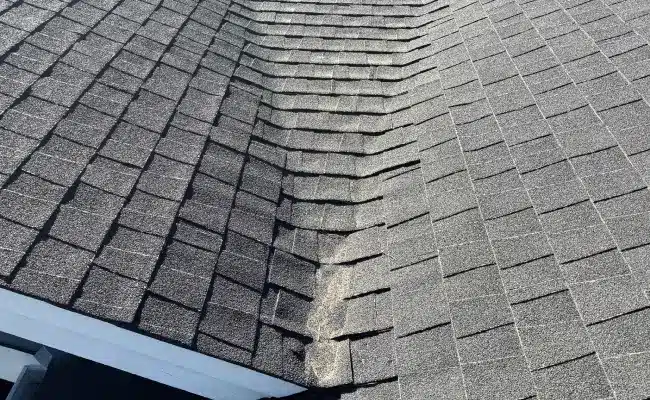
- Cracked, Blistering, or Curling Shingles: Look closely from your lawn with binoculars. If shingle tabs are cupping upward along the edges or showing fine surface splits, the asphalt is dried out.
- Missing or Lifted Shingles: Bare patches or tabs sticking up unevenly mean your wind resistance is gone and the adhesive seals have let go.
- Sagging Deck Lines: Any visible dips along the ridge or between rafters suggest serious moisture issues in the underlying plywood sheathing.
- Leaks or Water Stains in the Attic: Brown water rings on rafters or wet insulation after a rainstorm show that water has found a direct path through the outer barrier.
Why Blistering Happens in High Heat
Blistering occurs when moisture or air pockets get trapped between the asphalt plies during manufacturing or poor installation. Under blazing afternoon heat, that trapped pocket boils and expands into vapor, popping through the surface granules. The resulting small crater leaves unprotected raw asphalt open to the sun.
How to Extend the Life of Your Nevada Roof
Local weather is out of your hands, but taking a few practical measures keeps your roof performing at its best for years.
The Critical Role of Proper Attic Ventilation
A poorly ventilated attic operates like a closed oven, directly baking shingles from the underside. Heat trapped in the ceiling cavity radiates upward into the roof deck.
Securing the true attic ventilation benefits through balanced intake soffits and active exhaust vents lets hot air escape, drops cooling costs, and stops the asphalt from cooking on both sides at once.
Scheduling Routine Roof Inspections
Never wait for water to drip through a light fixture before scheduling an inspection. Spotting a rusted valley metal or a popped nail now avoids rotten roof boards later. Having a trained professional check your flashing and seals every couple of years keeps the system intact.
Immediate Repairs Following Severe Weather
Right after a dust storm or heavy monsoon cell passes, take a quick walk around your yard. If you notice shingle fragments on the grass or bent metal flashing, patch those spots right away rather than letting rain find its way into the home.
Why Trust New Roof NV LLC with Your Nevada Roof?
New Roof NV LLC has handled the specific demands of desert roofing firsthand. We are a crew rooted right here in southern Nevada, dedicated to helping neighbors make sensible decisions about their homes.
We don’t rely on cookie-cutter solutions, we install setups purpose-built to handle regional heat loads, high UV levels, and sudden windstorms. We know local municipal building codes backward and forward, and we pay special attention to balanced attic ventilation setups. By using desert-rated materials from proven manufacturers like GAF, we ensure your roof holds up to local weather realities.
Our company carries full licensing and insurance, backed by solid relationships with property owners across the valley. When we inspect your property, you receive direct, practical advice without high-pressure upselling. Protecting your living space and keeping maintenance straightforward is our daily commitment.
Frequently Asked Questions
Q. Does extreme heat void my shingle warranty?
A. No, high heat alone will not cancel a standard manufacturer warranty. However, poor attic ventilation will. Roofing companies require verified airflow measurements to honor material claims. If heat builds up because your attic lacks intake and exhaust vents, manufacturers can deny warranty coverage.
Q. What is the best color shingle for energy efficiency in Las Vegas?
A. Lighter earth tones, pale grays, and specialized cool-roof white blends work best. These surfaces bounce radiant energy away instead of absorbing it, keeping the roof deck cooler and easing the daily workload on your air conditioning unit.
Q. Should I lay new shingles over my old ones in Nevada?
A. No, overlaying new shingles on top of an existing layer is a bad idea in desert climates. The double layer traps heat, cooking the materials faster. It also prevents roofers from spotting underlying deck rot and adds unnecessary dead weight to your framing.
Q. How often should I inspect my roof in Nevada?
A. Aim for an inspection once a year, ideally in late spring before triple-digit temperatures arrive. Spotting compromised sealant strips or shifted flashing early prevents surprise roof leaks when summer storms hit.
Q. Can I safely pressure wash my asphalt shingles?
A. Never use a pressure washer on asphalt roofing. High-velocity water strips the protective ceramic granules off the surface immediately, exposing the bare asphalt to rapid sun damage and destroying the shingle’s water-shedding ability.
Q. Are concrete tiles better than asphalt shingles for Nevada homes?
A. Tiles last much longer but cost more and require reinforced framing. Upgraded asphalt remains the most cost-effective balance of price and durability.
Q. Should I install solar panels before or after replacing my roof?
A. Always replace an aging roof first. Removing and reinstalling panels later to fix a failing roof will cost you thousands in extra labor.
Q. Do ridge caps wear out faster than the rest of the roof?
A. Yes. Sitting at the highest peak, they take the most direct sun and wind, causing them to dry out and crack years before the rest of the roof.
Q. Will homeowners insurance cover roof damage from summer monsoons?
A. Typically, yes, if the damage is from sudden wind or debris. However, claims are routinely denied if the damage resulted from normal wear and tear or neglected maintenance.
Q. Does the cold desert night air actually damage hot shingles?
A. Yes. This rapid temperature drop causes thermal shock. Constantly expanding in the afternoon heat and rapidly shrinking at night slowly tears the shingles apart over time.
Conclusion
Nevada’s extreme desert climate cuts the lifespan of traditional asphalt roofing compared to milder regions. Basic 3-tab materials give you about a decade of dependable service, whereas sturdier architectural alternatives safely extend your protection toward the 20-year range. Matching proven materials with proper attic venting lets you protect your home without unexpected surprises. Schedule your roof inspection with New Roof NV LLC to keep your home protected year-round.

