What Are Asphalt Shingles? A Guide to Their Types, Features, and Lifespan
Summary: Asphalt shingles are a widely used residential roofing material because they are affordable, easy to install, durable, and available in a variety of styles. The three main types: 3-tab, architectural, and luxury shingles, differ in cost, lifespan, appearance, and resistance to wind and severe weather. Choosing the right shingle and maintaining proper attic ventilation, installation quality, and routine roof care can significantly extend the life of the roofing system.
Think about your roof for a second. It takes a heavy beating so you don’t have to. For over 70% of homes across North America, that heavy-duty defense system is built using asphalt shingles.
But if you’re gearing up for a roof replacement, you’ve probably hit a wall of confusion. Roofing terminology gets complicated fast. There are dozens of brands, wildly varying expected lifespans, and price tags that can make your jaw drop.
The reality is that not all roofing shingles are created equal. If you pick the wrong type for your local weather conditions or your home’s framing, you could easily end up wasting thousands of dollars on early repairs.
So what are asphalt shingles and why are they so prevalent? We’ll take you through what these materials actually are made of, the difference between the three main options on the market, and how to choose the correct one for your budget. Let’s get into it.
What Exactly Are Asphalt Shingles?
Asphalt shingles are the most widely used residential roofing material in the country. They consist of a tough fiberglass mat, a heavy coating of waterproof asphalt, and a top layer of crushed ceramic granules. Homeowners love them because they are affordable, easy to install, and surprisingly durable.
The Anatomy of a Shingle
To really grasp why an asphalt shingle roof performs so well, you have to look inside it. Modern shingles are built like a high-tech sandwich.
First, you have the backing. Think of this as the skeleton. It holds everything together when the wind starts howling. Over that skeleton goes a thick, sticky layer of specialized asphalt. This is the muscle of the roof, the part that actually keeps the rain out of your living room.
Finally, the manufacturer presses tiny, ceramic-coated rock granules into the hot asphalt. These granules do three things: they give the roof its color, they bounce harmful UV rays back into the sky so the asphalt doesn’t dry out, and they provide a crucial layer of fire resistance. Underneath it all sits a strip of heat-activated glue that bonds the overlapping layers together once the sun hits them.
Fiberglass vs. Organic Mat Shingles
A few years ago, shingles were built on an organic mat made of recycled paper and wood scraps. You don’t see those much anymore. Today, fiberglass backing is the gold standard.
Why? Because fiberglass is incredibly light. It puts way less structural stress on your roof deck. More importantly, fiberglass won’t catch fire easily. It boasts a Class A fire rating, which means a stray ember from a neighbor’s bonfire or a wildfire isn’t going to easily ignite your house.
The 3 Main Types of Asphalt Shingles
Talk to any local roofer, and they’ll usually hand you a brochure featuring three distinct choices. Here is how they actually stack up in the real world.
| Shingle Type | Relative Cost | Average Lifespan | Wind Resistance |
| 3-Tab | Low | 15-20 Years | Up to 60 mph |
| Architectural | Medium | 20-30 Years | Up to 130 mph |
| Luxury | High | 30-50+ Years | 130+ mph |
1. 3-Tab Shingles (The Economical Choice)
Features: These are the flat, basic shingles you’ve seen on houses for years. They are made from a single, thin layer of material and cut into three identical tabs. This gives the roof a very repetitive, flat, brick-like look.
Pros & Cons: The main draw here is the price tag. They are the cheapest option available. But you get what you pay for. They are thin, meaning a 60 mph gust of wind can easily catch an edge and tear them right off the roof. They also have the shortest lifespan. We generally only recommend these if you are on a very strict budget or fixing up a quick flip property in a mild climate.
2. Architectural Shingles (The Most Popular)
Features: You might hear roofers call these “dimensional” shingles. Instead of one flat layer, manufacturers laminate two or more layers of asphalt together. This creates a thick, textured look that mimics the shadows of real wood shakes.
Pros & Cons: This is the sweet spot for almost every homeowner. They offer fantastic weather protection, they look great from the street, and the pricing sits right in the middle. When you sit down to calculate the true cost of replacing a roof, architectural shingles almost always offer the best return on investment. They will easily outlast 3-tab versions by ten years or more.
3. Luxury Asphalt Shingles (The Premium Upgrade)
Features: These are huge, ultra-thick asphalt roofing shingles designed to look exactly like hand-quarried slate or rustic cedar. They weigh significantly more than the other options.
Pros & Cons: If you want your house to look like a million bucks without actually buying real slate, this is your ticket. They can handle brutal hail and fierce winds without breaking a sweat. The downside? They are expensive. Also, because they weigh so much, a contractor actually has to inspect your home’s framing to ensure your walls can safely support the huge weight.
Key Features and Benefits of Asphalt Shingles
So, why do millions of people choose asphalt over metal or tile every single year?
Cost-Effectiveness
Simply put, you get a lot of bang for your buck. Metal systems and clay tiles are great, but they can easily cost three to four times as much as an asphalt system. For a normal working family, asphalt makes financial sense.
Easy Installation and Repair
Because these materials are flexible and standard across the industry, a good crew can strip your old roof and install a new one in just a day or two. And if a tree branch falls and gouges a hole over your garage? A roofer can easily pop out the damaged shingles and slide new ones in without replacing the whole roof.
Variety of Colors and Styles
You aren’t stuck with just gray or black anymore. Whether your home is a modern farmhouse, a brick colonial, or a stucco ranch, there’s a color blend that will match it perfectly.
How Long Do Asphalt Shingles Last?
The numbers on the warranty brochure aren’t always what you get in reality.
- 3-Tab: Expect 15 to 20 years.
- Architectural: Expect 20 to 30 years.
- Luxury: Expect 30 to 50 years.
4 Factors That Impact Shingle Lifespan
Even a premium luxury product will fall apart quickly if the conditions are wrong. Here is what actually dictates your roof’s lifespan.
- Climate: If you live somewhere that gets hammered by temperature swings, heavy hail, or intense, unyielding summer sun, your roof is going to age faster.
- Attic Ventilation: We cannot overstate the importance of roof ventilation. If your attic doesn’t have proper intake vents at the bottom and exhaust vents at the top, it turns into an oven. That trapped heat literally bakes the shingles from the inside out, causing the asphalt to blister and crack prematurely.
- Maintenance: Letting wet leaves and pine needles sit in your roof valleys is a recipe for disaster. It traps moisture against the shingles and encourages moss to grow, which eats away at the granules.
- Installation Quality: Nailing a shingle too high or too low, missing the starter strips, or getting lazy with the underlayment will ruin a roof faster than any storm.
Expert Insight: In our 15 years replacing roofs, we’ve found that bad attic ventilation kills asphalt shingles far faster than severe weather. A sweltering attic will easily cut a premium 30-year roof’s life entirely in half.
Why Trust New Roof NV With Your Roofing Decisions?
We believe that an educated homeowner is our best customer. At New Roof NV, we’ve spent years on the ground in the roofing industry. Our crews have hands-on experience installing, repairing, and tearing off all three types of asphalt shingles in some of the most extreme weather conditions imaginable.
We aren’t just guys with ladders and a truck. Our goal isn’t just to sell you a chunk of asphalt. We want to sit down, look at your home’s specific needs, and help you make a long-term decision that actually protects your family. We do everything strictly to local building codes, we are brutally honest about our pricing, and we never skip the final quality inspection. We build roofs meant to last.
Signs It’s Time to Replace Your Asphalt Shingle Roof
How do you know when the roof is officially dead? Don’t wait for water to start dripping on your kitchen table. Grab a pair of binoculars or stand in your yard twice a year and look for these red flags.
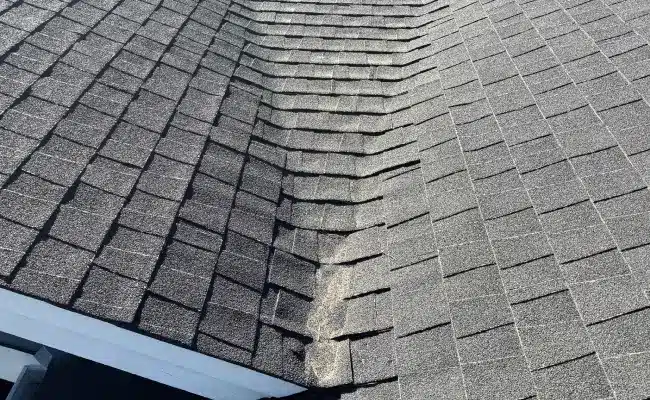
- Curling and Cupping: Look at the edges of the shingles. If they are curling up toward the sky, or dipping in the middle like a cup, the material is dried out and failing.
- Granules in the Gutters: Next time you clean your gutters, look for thick, black sand. A little is normal, but if it looks like a sandbox in there, your shingles are going bald.
- Cracks and Missing Pieces: If you can see jagged lines across the shingles, or if there are obvious dark gaps where wind ripped them away, the waterproofing is completely compromised.
- Bald Spots: If you see shiny black spots on the roof where the colored granules used to be, the sun is directly hitting the asphalt. It won’t last much longer.
If you spot several signs of roof damage at once, you need to act. Waiting just means the water will eventually rot out the wood decking underneath, turning a standard replacement into a large structural repair job.
Frequently Asked Questions (FAQ)
Q. Are asphalt shingles actually waterproof?
A. Yes. The thick layer of specialized asphalt acts as an impenetrable barrier. Because roofers install them in an overlapping pattern, gravity forces the rain to shed down the roof and safely into your gutters before it can sneak underneath.
Q. Which type of asphalt shingle lasts the longest?
A. Luxury shingles win this race easily. Because they are so much thicker and heavier than standard options, they can withstand years of abuse. Many of them easily last over 40 or 50 years if the attic is ventilated correctly.
Q. Can you just nail new asphalt shingles over the old ones?
A. You might see some guys doing this to save time, and some city codes still allow it. But we strongly advise against it. If you don’t tear off the old roof, you can’t see the wood decking underneath. If that wood is rotting, you’re just nailing a brand-new roof onto a crumbling foundation.
Q. How much wind can standard shingles take?
A. The cheap 3-tab options usually tap out around 60 mph. But if you step up to high-quality architectural or luxury lines, and the roofer uses the correct high-wind nailing pattern, they are tested to withstand gale-force winds up to 130 mph.
Q. Why are there ugly black streaks on my older roof?
A. Those streaks aren’t dirt. It’s actually a super hardy type of algae called Gloeocapsa magma. It loves to eat the limestone filler used in older shingles. Today, most high-quality architectural options come with copper-infused granules that naturally kill this algae before it can grow.
Q. How much does a new asphalt roof cost?
A. Costs vary by home size and shingle style. Basic 3-tab roofs average $5,000 to $8,000, while architectural systems range from $10,000 to $15,000.
Q. Do asphalt shingles need a lot of maintenance?
A. No, they are extremely low-maintenance. You simply need to keep your gutters clean, clear seasonal debris, and trim back any overhanging tree branches.
Q. Are modern asphalt roofs a fire hazard?
A. No. Modern fiberglass-backed shingles carry a Class A fire rating. This offers the highest level of residential protection against wind-blown embers.
Q. Can asphalt shingles survive severe hail?
A. Standard options can crack under large hail. If you live in a storm-prone area, upgrade to Class 4 impact-resistant shingles, which are designed to absorb heavy strikes.
Q. Are old asphalt shingles bad for the environment?
A. Not anymore. The roofing industry now actively recycles old tear-off shingles by grinding them down to repurpose the materials for paving local roads.
Final Thoughts: Choosing the Right Shingles for Your Home
At the end of the day, asphalt dominates the roofing world for a reason. It’s tough, it looks fantastic, and it won’t force you to take out a second mortgage just to keep your family dry. For 90% of the homeowners we talk to, architectural shingles are exactly what they need (a perfect mix of curb appeal, fair pricing, and heavy-duty weather protection).
Whether you’re missing a few pieces after a bad storm or you know your roof is on its last legs, don’t guess when it comes to your home’s structure. If you are worried about the age or condition of your current setup, it’s time to get a professional set of eyes on it. Schedule a professional roof inspection today so you know exactly what you are dealing with, and you can confidently plan your next steps.

