Gale force or high winds wrought havoc on your roof? Some signs of damage may not be so obvious, especially when checked from the vantage of the ground. Wind damage may include missing, lifted, or creased shingles, damaged ridge caps, loose flashing, roof leaks, and other forms of roof damage. A professional roof inspection, especially right after a storm or high winds, can help narrow down the impact of the damage and equip you to take the required next steps. Furthermore, a professional inspection can help you ascertain whether localized repairs or extensive roofing work may be needed.
Our roofers at New Roof NV are highly skilled at wind damage roof repair in Reno and thrive on repairing nearly all types of roofs damaged by winds. Whether you are dealing with lifted shingles, damaged ridge caps, misplaced tiles, or water leaks, we have something for everyone right up our alley. No matter what your wind damage roof repair concern, whether right after a storm or before the next one, we will be available for you in Reno and the surrounding neighborhoods. We have 25+ years of experience protecting Reno roofs from wind damage and we are certain we can protect yours too.
Common Types of Wind Damage We Repair
Missing/Damaged Shingles
High winds such as gale force winds, which run at 39-54 mph, can knock shingles loose and expose the underlayment. Repeated attacks from such high winds can result in granule loss, which will be apparent as an accumulation of granules in the gutters and the downspouts. High winds can also expose the fasteners, roof deck areas, and adjacent shingles, and unless repaired in time, can leave the exposed area vulnerable to attack from other elements.
Lifted or Loose Shingles
Wind may not necessarily displace shingles but may make them loose, by repeatedly attacking the adhesive sealant, lifting the edges, leading to curled or cupped edges, loosening the fasteners and moving around the roof edges. These loose or lifted shingles make the underlayment just as vulnerable to the relentless attack of the elements as missing shingles. Unless acted upon in time after being detected through a professional roof inspection, these loose shingles can be more insidious in their damage than missing shingles alone.
Creased or Torn Shingles
What’s worse than lifted or loose shingles? Creased or torn shingles because they present the apparent notion that your roof is fine, even when they are the reason that it may not be. Creasing or lifting occurs when a wind blows fast enough to apply a pressure differential between the front and the back of the shingle, i.e., an uplift force. As the shingles rise in the wind, more area is exposed to it and more uplift force is generated. This leads to an apparent crease in the shingle, particularly in places where the roof is exposed to high wind areas such as eaves, ridges, hips, etc.
Ridge Cap Damage
Your roof’s ridge cap is its spine, sealing the joints where two roof slopes meet. Once your ridge cap is damaged due to high winds, other elements get direct entry, such as rain and snow. Water intrudes into your attic right through the peak and the wind can get under the top row of shingles on both sides of the house, peeling them back. Furthermore, a missing cap is an open door for pests looking for a hiding spot or safe space in which to build their nest. At New Roof NV, we know which damage signs to look for to ensure that your ridge cap is repaired to a better condition.
Roof Flashing Damage
Flashing is the thin metallic material installed around roof edges, chimneys, skylights, and vents. Its purpose is to direct water away from the vulnerable areas of the joints. It’s a no-brainer then, that a damaged flashing will lead to leaks and water intrusions, especially when it becomes rusted, cracked, or loose. Common signs of a damaged flashing are the development of water stains on the ceiling or the attic, loose or creased shingles around the vents or chimneys, corrosion or visible gaps in flashing edges, mold or soft wood near roof openings. Flashing damage compromises your roof’s waterproof seal, leading to the intrusion of water in the underlayment, causing shingle curling and affecting your home’s framing.
Wind-Driven Debris Damage
Wind-driven debris damage occurs when high velocity winds, such as those during thunderstorms, pick up natural or man-made objects from their path and hurl them like projectiles against the roof. This wind-borne debris may consist of tree limbs or branches or other objects like shingles, furniture, or tools. The damage caused by this debris may manifest as broken shingles, punctures, or cracked tiles. Depending on the extent of the damage, our wind damage roof repair specialists at New Roof NV may recommend repair of localized areas or complete roof replacement.
What Does Wind Damage Look Like on a Roof?
Shingles Missing From One Roof Slope
Shingle Tabs Lifted at the Edges
Creased Asphalt Shingles
Damaged Ridge Caps
Loose Flashing
Cracked or Shifted Roof Tiles
Bent or Damaged Gutters
Debris Impact Marks
New Interior Water Stains
Signs You May Have Wind Damage
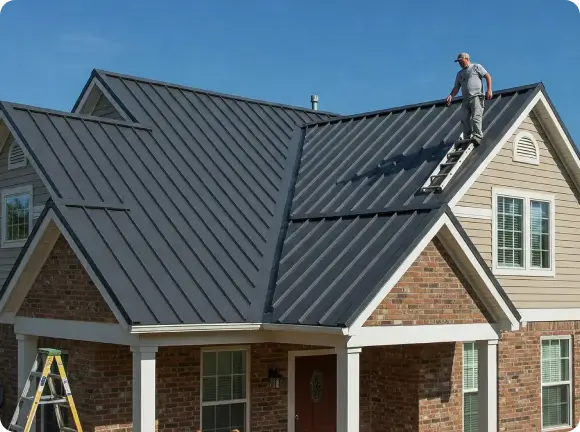
How do you check whether your roof has sustained wind-borne damage? You do so after performing a safety audit yourself from the perimeter of your property, right from the safety of your ground. Do not attempt to check your roof on your own, as there may be a risk of a slip and fall. Instead, look for alternative signs of roof damage from the ground. If you find shingles in the yard, visible missing shingles, loose or lifted roofing, damaged ridge caps, bent flashing, new roof leak, ceiling water stain, unusual roof debris, damaged gutters, broken roof tiles, roof noises or movement during storms followed by visible damage, your roof may have been damaged by high winds from a storm. Not sure if your roof has been damaged, we invite you to book a professional roof inspection service from New Roof NV and get your peace of mind secured by roofing professionals who have been in the industry for more than 25 years.
Can Wind Damage a Roof Without Blowing Shingles Off?
High winds can damage roof materials even when they remain on the roof. For example, winds can loosen the sealant adhesive around flashing and ridge caps, making your roof lose its structural integrity. Winds may also lead to the development of creases, lifted corners, loose fasteners, flashing movement, and weakened roofing around edges. However, you must note that not every lifted shingle is the result of a wind-related storm. Sometimes, shingles get damaged due to previous exposure to the elements, resulting in their edges lifting or curling over time.
Why Reno Roofs Need Attention After High Winds
Reno, and most of Northern Nevada, is prone to high winds. These high winds can quietly ruin your roof’s structural integrity over time, by attacking the shingles and their adhesive sealant. Not every storm, gust, or gale-force wind presents its damage in the form of a missing shingle. Sometimes the damage is invisible to everyone but a trained professional, who knows where to look.
Even if the winds stop blowing, the damage they cause is already done, with compromised sealant, loose flashing around chimneys, seals, and vents, and loose penetrations. Furthermore, wind-related damage is further exacerbated by your roof’s orientation, if it happens to be in a direction that challenges the wind’s uplift force, roof edges and corners, and the age of the shingles. Other signs of damage may be loose fastening, previous deterioration, exposure to high winds and the debris they bring, and the installation quality of your roof.
Seasonal winds are familiar territory for us, and we know what to look for and where once they pass. Northern Nevada often gets hit by gales and strong gusts, which can do serious damage, especially to roofs that were already worn or poorly installed. Call New Roof NV for a complete roof inspection for your Reno roof right after a storm, so that our professional roof inspectors can document the damage in the form of foolproof photographs and field notes for you and the insurers. We will know what to look for, as we have done for over 25 years, and present evidence of damage that will need to be repaired.
Roof Areas Most Vulnerable to Wind Damage
Roof Edges and Eaves
Rakes
Ridge Caps
Corners
Flashing
Previously Repaired Areas
Roof Leaking After High Winds?
Do you notice your roof leaking right after a storm? Is the constant drip-drip-dripping increasing your panic and worry every passing second? Or is the widening water stain on your ceiling deepening your brow’s furrows over the potential costs you may incur for a roof repair? Before you worry about the potential costs, it may help you to know why your roof is leaking in the first place. After all, leaks rarely correspond with a gap in the exterior right above. Water travels through the roof assembly, following the path of least resistance, and leaks at a place other than at its place of intrusion. Following are some signs of roof leaks right after a storm that you should look out for:
lifted shingles
missing shingles
damaged flashing
loosened vents
debris punctures
damaged valleys
cracked tiles
displaced ridge caps
Our Wind Damage Roof Inspection Process
Our wind damage roof inspection process is transparent and streamlined, divided into several easy steps so that you are always in the loop about what’s happening and what’s coming next. From the initial inspection to the final recommendation, we will perform our duties with diligence and honesty, so that you get a roof that looks solid and ready to take on any storm, even after getting damaged by high winds.
Step 1 – Discuss the Wind Event
Sure, you remember the storm or the gale/gust force winds that blew with a fierce velocity, but do you remember on which exact date they occurred? Remembering the day the high winds blew can help delineate wind-related damage from other types of damage. In this step, we might also ask you to rack your brains a little harder and remember your roof’s condition right after the storm passed. Did you find broken shingles or their fragments around your property? Did you notice leaks on the ceiling right after the winds stopped blowing? If you answer in the affirmative for any of these questions, there’s no doubt that your roof has been compromised by the winds and sustained damage because of them.
Step 2 – Inspect the Roof Exterior
It is important that you leave this step to the professionals (us!) instead of venturing on a risky roof climb on your own, lest you slip and fall. We at New Roof NV are better equipped to handle roof inspections because we have safety equipment protecting us from a fall. Thanks to our extensive experience and years of training, we know which damage signs to look for. We will thoroughly inspect your roof’s shingles, ridge caps, edges, valleys, flashing, vents, penetrations, tiles, and gutters to look for all possible signs of damage.
Step 3 – Check for Water Intrusion
Water has a sneaky way of showing up far from the place it entered through your roof. That is why, we trace the trail of water intrusion to its original source, because our extensive experience has taught us that not all leaks appear where water enters. We check your attic, insulation, visible roof deck, and ceiling to confirm all signs of water intrusion.
Step 4 – Photograph Damage
Like a good professional roofing company, we will document the roofing damage before getting to work on it. Why? Because documented damage serves a dual-pronged approach: it serves as evidence of the improvement made before any repair work was attempted as well as evidence for the insurer of the extent of the damage sustained by your roof. Speaking of the extent of the damage, photographs and field notes can help document whether the whole roof was affected or localized sections, what the exact location of the damage was, and if any related components were affected by the winds’ impact.
Step 5 – Determine Repairability
Your roof’s repairability will hinge on the extent of the damage it has sustained: whether it is widespread or confined to a few localized areas. We will also try to find out whether the damage has spread to the other regions, especially if the underlayment or decking has been left exposed. We will begin our repair work only after we are extremely thorough with our inspections.
Step 6 – Explain Repair Options
Once we are done inspecting every nook and cranny of your wind-damaged roof, we will explain the roof repair options to you in great detail. We believe in utmost transparency and honesty with our clients, as we keep them in the loop about their roof’s damage and required repair work from the moment we have a look at the roof. Thus, we will recommend all repair options to you along with the required material cost so that you are not left with a rude sticker shock later.
Wind Damage vs. Normal Roof Wear
If you notice recently-missing or creased shingles, lifted roofing components following a wind event, newly displaced flashing or debris impact such as dents, you are dealing with wind damage on your roof. On the other hand, gradual granule loss over the years, color fading due to sun exposure over the years, long-term curling, brittle shingles, and old sealant deterioration are all signs of normal roof wear which should not be mixed with wind damage. Here, you must note that insurance causation does not depend on roof appearance alone. The roofing contractor evaluates visible condition and repair needs for damage.
Wind Damage
- Recently-missing or creased shingles
- Lifted roofing components following a wind event
- Newly displaced flashing
- Debris impact such as dents
Normal Roof Wear
- Gradual granule loss over the years
- Color fading due to sun exposure over the years
- Long-term curling
- Brittle shingles
- Old sealant deterioration
Wind Damage Roof Repair vs. Roof Replacement
| Repair May Be Appropriate | Replacement May Need Consideration |
|---|---|
| A few shingles are missing | Multiple roof sections affected |
| Damage is localized | Widespread shingle loss |
| Flashing issue is isolated | Multiple roofing components damaged |
| Surrounding roof remains sound | Roof already has significant deterioration |
| Decking damage is limited | Extensive decking damage |
| Reliable repair is possible | Reliable repair boundary cannot be established |
Wind Damage and Homeowners Insurance
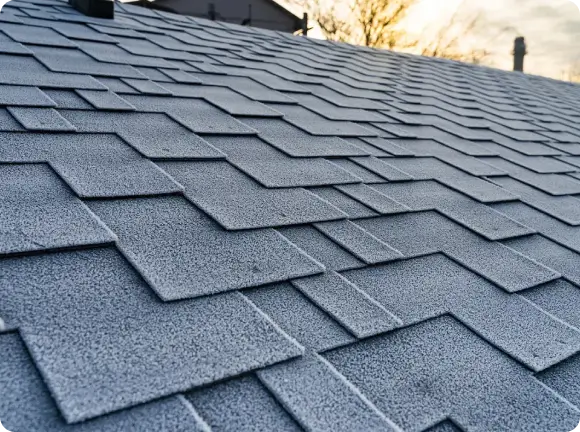
A professional roofing contractor will inspect the wind-damaged roof on your behalf, checking all visible and not-so-visible areas to photograph the extent of the damage. Our professional roofing contractors from New Roof NV will describe your roof’s condition in great detail, recommend appropriate repairs and prepare an estimate based on the scope of repairs required.
Your insurance company determines what your policy covers, what are the deductibles, which type of damage is covered and what is the claim payment. Claim deadlines and requirements vary by policy, so it is worth checking with your insurer early.
How to Help Protect Your Roof From Future Wind Damage?
Protecting your roof from future wind damage demands a proactive approach. By scheduling regular inspections, especially after high winds and heavy storms, getting loose materials repaired, maintaining flashing, addressing aging shingles, getting the roof’s ridge cap inspected, appropriately maintaining the nearby trees, using roofing materials appropriate for local design conditions when replacing a roof, and following all manufacturer and code installation requirements, you can ensure that your roof becomes strong enough to withstand any future wind-related blows.
Why Choose New Roof NV for Wind Damage Roof Repair?
25+ years of roofing expertise
Experience working in Reno, Nevada
Experience working with tile, metal, and asphalt shingles
Residential and commercial roofing expertise
Roof repair, replacement, and inspections available
Locally-owned and community-focused
Nevada Contractor License #0086415
Frequently Asked Questions
What should be documented after wind damage?
Useful items to be documented after wind damage include: date of the wind event, photographs of the damaged roof taken from the ground, missing roofing materials, any water stains spotted from the interiors, exterior roof damage as documented by a professional roofing contractor, damaged gutters or exterior components, contractor estimate and documentation detailing temporary repair.
How much does wind damage roof repair cost in reno?
The repair cost for wind-damaged roof repair depends on the number of damaged shingles, roofing material used, pitch of the roof as well as its accessibility, damage caused to the ridge, flashing, underlayment, and decking, the impact of debris and scope of repair required. Replacing wind-damaged shingles offers a very different scope as opposed to the one offered by damaged ridge caps, flashing, underlayment, or roof decking. An inspection is necessary before an accurate roof repair estimate can be prepared.
How quickly should wind damage be repaired?
If you detect active water intrusion in the form of a leaking ceiling or growing water stains, then your roof needs prompt attention. Else, if you notice missing roofing materials, then inspection should be arranged as soon as possible because that could indicate protective layers getting exposed. Lifted or loose materials raise the need for evaluation before additional wind damage can cause further movement while any form of minor damage that does not result in leakage still deserves inspection because some damage may not cause immediate interior symptoms. Yet, if it is ignored, it can rot your roof from the inside out, prompting a much costly repair or replacement later.
Should I have my roof inspected after high winds?
It is definitely advisable to have your roof inspected after high winds, even if you do not notice any apparent damage. The reason is that winds may knock off some shingles, causing them to crack or crease. These unattended shingles can become a source of water intrusion later. High winds can also damage ridge caps, flashing, vents, tiles, and other roof components either directly or through the debris that they carry.
Can lifted shingles be repaired?
Yes, lifted shingles can be repaired if the material is flexible, unbroken, and free from any creases after high winds.

Contact us
Get in touch with New Roof NV today for reliable Roofing services in Nevada. Whether you need repairs, installations, or consultations, our experienced team is here to help. Call us, email us, or fill out the contact form — we’re ready to power up your next project!